CIUTADELLA PARK : NO PLACE CAN BEAT IT!
Visit the Ciutadella Park in the heart of Barcelona
The parks in Barcelona are plenty, but I know a place for readers and writers, for people like me who love to go for a run, families, teenagers who are heading out for a picnic on a Saturday afternoon, or couples in love who are looking for a romantic walk. I am talking about Parc de la Ciutadella (in English: the Ciutadella Park) located in El Born. And by now, I can say that I have developed an addiction. However, I don't know if I am more addicted to running or going to the park because I spend almost everyday here - running.
For you who have not yet been, this Barcelona park is a gorgeous open space behind the chic Barcelona neighborhood : El Born. The Ciutadella park is close to the France Train Station, the Olympic Village, Barceloneta neighborhood as well as the peer and the beach. When going for a run, I usually run through the park, over to the Arc del Triomf (this is my goal..so I tend to run extra fast over here) and then I continue down to the seaside in order to let the cool breeze from the ocean cool me off. This park is actually a great piece of work to study for the one who is interested in history. Arc de Triomf for example, the grandest entrance to the park, was designed for the 1888 Exhibition by Josep Vilaseca i Casanoves. Thinking about it, I actually don't go here mainly for running because what I find interesting and special about this park is that it's a place for everybody. Built in the late 1860s on the site of a former military fortress (Ciutadella) this park offers a way range of fun and different things to do. You will find groups of every age; families having picnics, kids playing football or frisbee, while others are practicing juggling, balancing, enjoying the sunshine from a park bench or playing drums and guitar.

The Ciutadella park offers a wide range of museums and other attractions. For example, you have the Museum of Modern Art, The Geology Museum, The Zoology Museum as well as the Barcelona Zoo. I actually didn't know that the Barcelona Zoo existed until the other day when I couldn't find my way back in the Ciutadella park while taking a short cut when going for a run. Furthermore, the park features a lake where you can rent a boat and take a ride on the water for approximately 5 Euros per half an hour. However, what I did not know is that the park closes at 22:00. As I work late hours (yes, sometimes even until 20:00..) I also tend to go running late. To make everything convenient for you (I mean, I don't want you to go here excited to spend some hours in the sunshine or visiting one of the museums only to find out it's closed..) I thought I'd give you the timetable for the different activities. Barcelona Zoo: open Nov-Feb 10 am - 5 pm daily March-May & Oct 10 am - 6 pm daily Jun - Sep 10 am - 7pm Entrance: 14 Euros, Children 8.5 Euros Museu de Zoologia & Museu de Geologia: Open 10 am - 2.30 pm Tue-Sun (Thu until 6.30 pm) Entrance: 3 Euros each museum, 4 Euros Joint ticket To get to the Ciutadella Park, you can take Metro L1 to Arc de Triomf or Metro L4 to Jaume I. I would suggest you take the metro till Arc de Triomf as this is a very nice walk (surrounded by giant palm-trees and London-look-alike street-lights) and closer to the park. Parc de la Ciutadella, Between Pujades and Picasso Street, Open Hours: 08:30 - 22:00 Charlotte Giver
CATALAN MODERNISM: BARCELONA’S FAMOUS ARCHITECTS

Catalan Modernism in Barcelona: Some Famous Masterpieces!
It’s no secret that Barcelona is world renowned for its eclectic and beautiful architecture. Thousands upon thousands of tourists pass through the city each year and see the likes of the Sagrada Familia, La Pedrera, and Casa Batlló. Barcelona is especially famous for Catalan Modernism.Definition of Catalan Modernism
Known also as Modernisme, Catalan Modernism was the equivalent of Art Nouveau and lasted from roughly 1888-1911. It’s best known figure was Antoni Gaudí. The movement was led by highly individualistic and anti-traditionalist intellectuals who were attempting to update Catalán arts and ideas so as to catch up to the rest of major European cities.
Actually, the area of Paseo de Gracia between c/ Valencia & c/ Aragó is called the Block of Disaccord. When the city expanded past the old city limits, all the richest Barcelonés, and the top catalan architects of the day, competed to build the best and most intricate buildings. In the end we were left with a street full of some of the most extraordinary examples of Catalan Modernism architecture ever produced. In this top-ranking article we will pass through some of the most famous Catalan architects and their buildings, touching on one especially famous Catalán hero named Josep Puig I Cadafalch. He was the mastermind behind “Casa de les Punxes” (House of the Toothpicks), “Casa Amatller” & “Casa Matí” where the famous Catalán resturant Els Quatre Gats is located.
Who was Josep Puig i Cadafalch?
Josep Puig i Cadafalch was a famous Catalan Modernism architect who was born in Mataró the 17th of October 1867 and died on the 23rd of December 1956. He was a disciple of Lluis Domenech i Muntaner who designed the “Palau de la Música” and “Casa Fuster”, Woody Allen’s favourite five star hotel, and “Casa Lleo Morera”. Both architects were of great importance for the Catalan Modernism movement that made Barcelona the great architectural city that it is today.His Works:

Josep designed “Casa de les Punxes” in the name of the “Terrades” brothers who wanted to combine their two houses into one building. He projected the Gothic style of Europe with some Medieval aspects like the building’s six towers. The towers have an iconic shape with needles on top fittingly giving it its name of Les Punxes, which is Catalán for toothpicks. It is located on Avenida Diagonal but it is not open to the public. Another piece of Catalan Modernism architecture created by Puig I Cadafalch is Casa Amatller, the house that was custom built for the Amatller family who made their fortune in chocolate and other investments. The house is part of the Block of Discord where two other famous architects have had assignments for other families (like casa Batlló and Casa Lleo Morera). Casa Amatller houses the institute Amatller for the Spanish Arts. Only the entrance is open to the public and the front of the building displays sculptures of Eusebi Arnau who was a famous Catalan sculptor.

The restaurant Els Quatre Gats is located in “Casa Martí”, which was designed by Josep Puig i Cadafalch. When the building was officially opened it served as a hostal, bar and cabaret but it soon became a central meeting point for Barcelona artists and intelligentsia. The musical “Le Chat Noir” was inspired by this restaurant and the interesting people that used to hang out there. Our next update on Catalán Modernism will be starring: “Lluis Domenech i Muntaner” the designer of “Palau de la Música” and other great buildings in the Catalan Modernism architectural landscape.
SHOPPING IN BARCELONA: ADVICE ON WHERE TO SHOP IN GRACIA
Shopping in Barcelona : Discover Gracia!

Living and shopping in Barcelona definitely requires one to have a lot of self-control over the finer things in life and with the countless Barcelona parties, festivals and the wide variety of food and drink on offer, it’s far too easy to indulge here.
Then, just when you think you have it all under control the city hits you with another vice, possibly the worst of all, you got it girls… Barcelona shopping!
The words Barcelona and Shopping go hand in hand and it certainly has the potential to offer an incredible shopping experience but, at the same time it also has the potential to destroy the credit card and rinse the bank account.
In fact, for those among us with a little less restraint, when it comes to matters of the shops, a guilty conscience and empty purse is inevitable!
You can’t escape it, down every cobbled pathway and around every winding corner, Barcelona shops spill out on to the road from one district to the next. The Born and The Raval are rich with small boutiques and quirky little stores which appear out of nowhere, patiently awaiting your curiosity and custom. Whilst Catalunya, Passeig de Gracia and Diagonal are less discreet and swamped with big imposing buildings, proudly embossed with huge recognisable fashion brands such as Calvin Klein, Versace and Armani.
Just like Alice in Wonderland you’ll constantly stumble across new surprises and won’t be able to resist the “BIG” and “SMALL” windows exhibiting the vast array of jewellery, arts, clothes and antiques, all whispering the words, “Buy me”.
So, with so much temptation how is it possible to give advice on where to go for some good old shopping in Barcelona? Well, my suggestion would be to explore, get into every nook and cranny of this city and discover it’s true shopping delights.
However, for an extra special trip I recommend paying a visit the lovely neighbourhood of Gracia Barcelona.
Contrasting words like hip, traditional, bohemian, old, trendy and time-honoured attach themselves to this place. Direct contrasts live side-by-side and it’s not uncommon to find a sparkling stylish boutique neighbouring a conventional Catalan store. Yet, whilst you may think this odd mix may confuse and blur its identity, the regular differences only add to its charm. What you’ll find in Gracia Barcelona is a popular, modern district, proud of its roots. Especially the Calle Verdi Street in Barcelona is not to be missed.
Gracia Shops:
My suggestion would be, to ensure you make the most of the shopping potential in the Gracia district, is to wander up and down the many streets, mosey on through the countless squares and develop your own personal fondness for this area. However if clothes and accessories are on the top of your shopping list, then check out these cool little stores.

Retro City, Travessera de Gracia
If you’re looking for reasonably priced, super cool vintage stuff then don’t miss this place. From the outside it’s a plain shop with no sign, simply resembling a hole in the wall. Yet, inside it comes to life with colour. It’s crammed literally from floor to ceiling with accessories, shoes, bags, hats and quirky clothes. If you love this type of gear then you’ll love this shop.

PHILO, C. del Pendes
It’s a small chic boutique with a modern and impressive collection and the ability to suit a range of tastes and budgets. New design is contrasted with retro style clothing and this place, although small, is a girl’s miniature shopping paradise.

Locas De Atar, Torrent de l’Olla
The clothes that grace the shelves here are distinctive, unique and exclusive. This shop promotes young talent and offers designers the chance to showcase and sell their work. This means each individual piece is different to the next and you get to sport a design much more personal and rare, something you’ll never find on the high street.
…and afterwards?
Well, if you’ve chose to avoid the mainstream labels and found yourself in the Gracia Barcelona, exhausted and carrying too many bags, then take a seat in one of the many squares. Here you can marvel at the impressive Catalan architecture and spend your last few pennies on a sparkling glass of Cava. The perfect ending to a perfect shopping in Barcelona expedition.
And you ? What are your favorite places to go shopping in Barcelona?
Kerry Jessop
BEST OF AIRBNB – MOST LUXURIOUS RENTALS IN BARCELONA!
Best Of AirBnb - Some Of The Most Luxurious Rentals Seen In Barcelona!
AirBnb has become one of the most popular platforms to share and rent apartments. Whether you're looking for a long term contract or just a holiday visit, AirBnb most definitly have what you're looking for! But AirBnb also have some pretty luxurious rentals! We have collected a list of some of the most luxurious rentals seen in Barcelona! These places may not be for everyone, but if you just won the lottery (or are ready to give up your first born child) this is for you! - We give you, the best of AirBnb!1# Welcome Aboard, Sir!
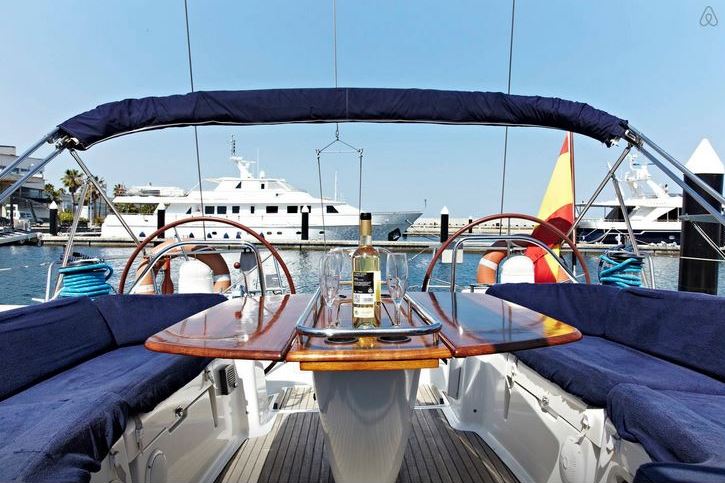
Wanna go for a boat ride? This beauty of a yacht contains 4 double cabins with own bathroom and a complete kitchen. You can even rent a Skipper for a day (or two) if you want to go on a day trip! Pretty cool huh? Well I’m ready to go! Are you? Luxurious sail yacht in Barcelona €475 Pr. Night
2# 1001 Arabian Nights'ish!
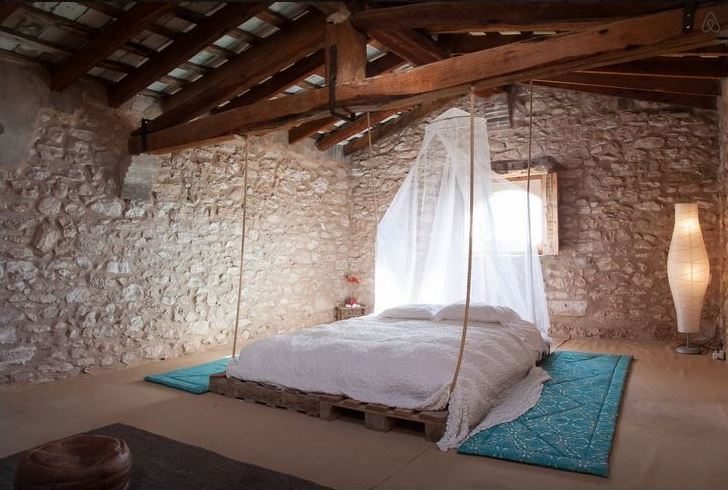
Count me in! This Bohemic/Aladdin'ish old Fortress is surrounded by vineyards, has a great sea view and only a 2 min walk from the beach. During your stay you can request a “detox” health program provided by professional therapists, they can help you eat right and regain strength and energy! Getting skinny while you’re on vacation?! How awesome is that!? ANCIENT 1770 FORTRESS - MASIA €500 Pr. Night
3# Who Said Penthouse?
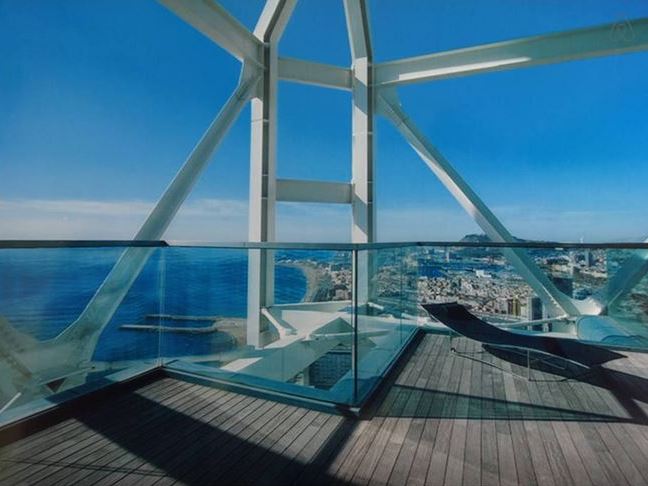
A two level apartment in best “fifty shades of grey” style! Not only does this apartment come with a stunning view, it also has a Terrace, Jacuzzi, swimming pool and sauna, you can even order breakfast if you feel like it! If they can guarantee a visit from Mr. Grey I’m moving in! Over the top apartment €500 Pr. Night
4# Panorama View!
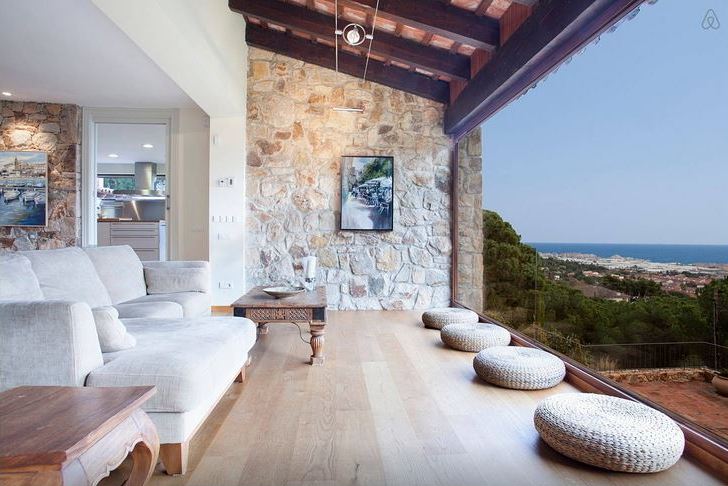
No worries, I’ll just spend the rest of my days on the couch, who needs a T.V. anyway with this view?! This gorgeous Villa has a full panorama view over the beach, an exclusive private pool, lounge area with a pool table and if you’re up for it a huge piano! If you want pure luxury and relaxation this is the spot! LUXURY HOUSE WITH SWIMMING POOL €1100 Pr. Night
5# Heaven In The Middle Of Barcelona!?
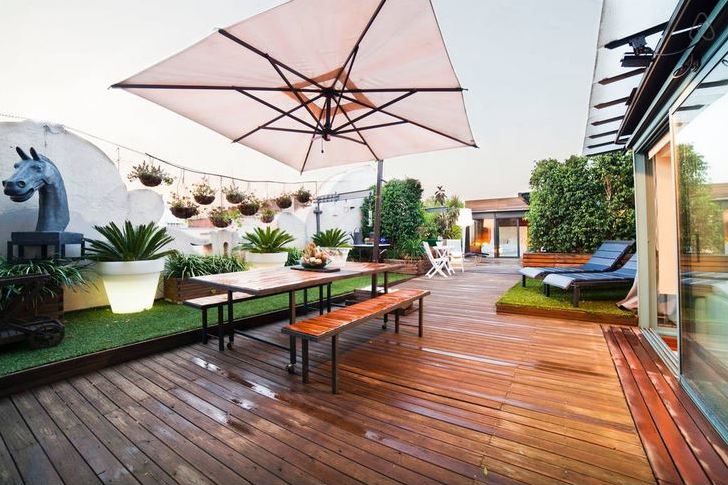
Did we just discover heaven on earth? OMG YES! This chic and trendy designer looking castle is centered in the Golden neighborhood in Barcelona! 5-10 walk from the beach, killer terrace (by that I mean like humongous terrace!) and there’s room for 7 people (so you can bring your friends!). Old-world style meets modern life in this completely renovated apartment, with perfectly preserved 18th century façade of the building. City vacation on a whole new level! The Modernist €600 Pr. Night
6# Feeling Adventures?
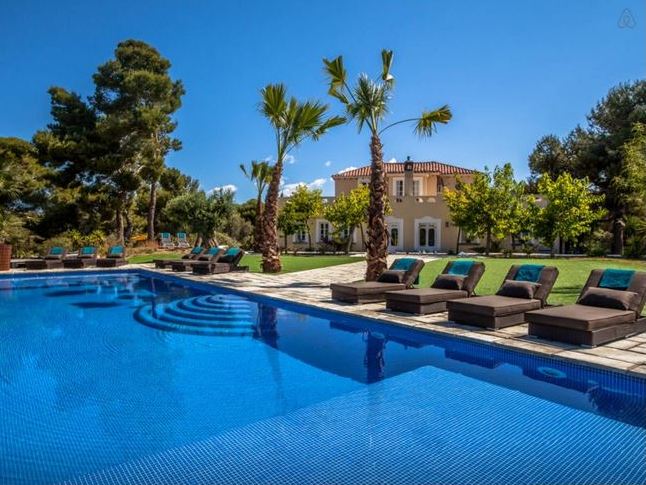
600 acres of absolute privacy! This Mansion offers 360 degrees of breathtaking views, enormous heated pool and huge terrace. With 400 square meters of living space and perfect location you should be able to sit down and enjoy the sweet life of Barcelona (or worry that you might get lost!). Whether you’re the active or “relaxing” type of person, this place gives you the opportunity to do both, the mansion is right up the Garraf National Park where you can go hiking/Biking, maybe visit the Buddhist Monastery or you can just stay home and drink some of the local wine! I’m ready to go! Are you? Casa Nova Estate, Sitges €2000 Pr. Night
7# Pool Party Anyone?
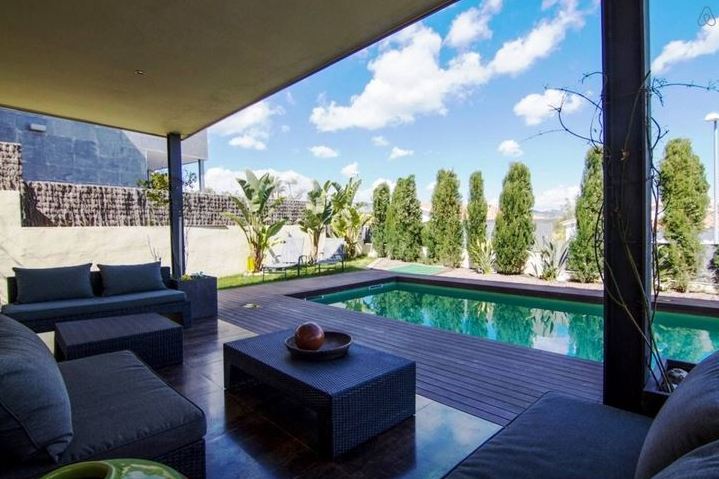
Perfect spot to work on your tan, maybe invite some friends over for Tapas? Oh Yes. 270 m2 of pure luxury in 2 floors, humongous bathroom (with Whirlpool tub!!!), awesome kitchen, great pool and terrace with your own BBQ Grill. Here you’re guaranteed a vacation in best Hollywood style! I want to live here! Don’t you?? Private villa at 3' of Sitges €500 Pr. Night
8# Casa Del Spain
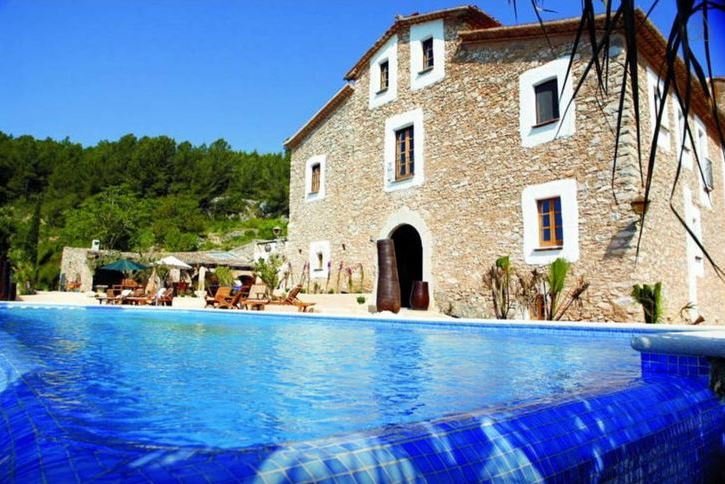
Did you ever wonder how it would be like to be a real Spanish Señorita or Señor? Well here’s your chance, this enormous castle has no less than 300 acres of private ground with 14 kilometers of private tracks where you will find pear, olive, cherry, walnut and almond trees even Xarello grapes which is used for its own brut nature and white wine! I’m feeling the Spanish charm! Don’t you?? Spanish villa like no other €1500 Pr. Night Did you enjoy the best of AirBnb? I know we did! Now we just have to win the lottery to get one of these beauties. Let us know which is your favourite in the comments below!
TIPPING IN BARCELONA – SHOULD I TIP ?
Everything you need to know about tipping in Barcelona !
NO, niet, nein, non !
Buenas cuentas, buenos amigos! Tipping in Barcelona is not expected unlike in America, Great Britain or the Netherlands for instance where tips are a must because waiters practically live from tipping. In Barcelona (and Spain in general) you can be as scroogy as Scrooge himself. Everywhere you go, you’ll be given back the exact change: waiters get paid on a fixed salary each month and benefit from a rather well developed social system compensations.
So who can you tip in Barcelona?
You can tip waiters in restaurants, bars and clubs, taxi drivers, grooms in hotels (but none of these people expect it). Do not tip anyone else like public agents of any kind, hairdressers, teachers or employees especially in expensive and posh places, they don’t need it and/or they are supposed to give you the best service ever, regardless of what you give them in return.Another tricky question: when is tipping in Barcelona preferable?
Well, you obviously tip in Barcelona whenever you feel like it: when the service pleases you, when the food is awesome, when the cab driver makes you laugh, when the waiter/waitress is nice, when you want to impress somebody (anybody for any reason)… Tips in Barcelona are left only when you pay cash. If you pay with a credit card, there is no second line on the receipt for tips.
It cannot be denied that tipping in Barcelona is pleasant whenever tips are not expected. There is nothing like seeing a bright smile suddenly expand on somebody’s lips and gratefulness appear in their eyes. Then, you can go home on a pink cloud for your good action. Besides, if the service you have just received is normal or bad, why should you tip? Catalan people will appreciate any tip you leave without feeling insulted, from 10cents to any amount you like. Tips of 1 or 2€ are already very good tips in Barcelona. In certain places waiters ring a bell anytime they receive a tip (as in Síncopa) and I sometimes tip them with a simple “keep the change!” just to hear the bell. Tipping in Barcelona is a left to your appreciation. Make good use of it! Yours, A.
PARC DEL LABERINT D’HORTA – EL LABERINTO BARCELONA
The Parc Del Laberint D'Horta – One of The Most Beautiful Parks in Barcelona!
Located a bit further away from Barcelona’s city center, the Parc del Laberint d’Horta is a must-see for all of Barcelona’s visitors. The "Parc del Laberint d’Horta" is the oldest Park in Barcelona. It consists of a neo-classical garden dating from the 18th century, which was extended to several elements of a romantic garden in the 19th century. It was given the name of the laberinto park due to it being one of the most beautiful, still existing garden labyrinths in Europe. The artful labyrinth was built right in the heart of the grounds and is, in my eyes, the most wonderful attraction in the park.
The Parc Del Laberint D'Horta and It's Surroundings
The Parc del Laberint d’horta belongs to the area called Horta, which was an independent community until 1904. Great ressources allowed good agricultural use of fruit, vegetables and wine. During the 18th century the place turned out to be a summer residence for a lot of wealthy and blue blooded people. The total size of the park is 57,07 hectares which are split up as follows: 1,92 hectares: This is the size of the area between the Ronda de Dalt and the Palais Desvall. Nowadays, this area is home of the Velòdrom d’Horta (the Olympic cycling stadium) and a small public playground with a small cafe. 7,36 hectares: This is the total size of the actual Parc del Laberint. 44,79 hectares: This is the size of the area which still belongs to the park, although walking is pretty hard.


How to get there: The easiest way to get there, beside a car, is to take the metro. You are looking for L3 (blue line). The station is called "Mundet" and is a few steps away from the entrance of the park. In general, the park is a must-see for all of Barcelona's visitors. It's beautiful, interesting and romantic. You can sit on the benches, relax, enjoy mother nature, and the unique surrounding buildings. Although Parc Ciutadella is pretty nice as well, the laberinto park became my favourite park in Barcelona. What about you? Have you ever been? What is your favourite park in Barcelona? Yours, Alexander Kolb
BARCELONA AFFORDABLE MENU – EAT OUT FOR LESS WITH EL TENEDOR!

When you want to have some dinner but you're looking for a Barcelona affordable menu, things can be a bit tough. During the day you can find affordable lunch menu's almost everywhere. But at night it is somewhat different in Barcelona, the dinner menu prices can triple compared to the lunch menu.
Barcelona Affordable Menu - The Fork
Let me inform you about a great website I stumbled upon called El Tenedor , or in English The Fork. The model works like this: the website approaches all kinds of restaurants trying to get great deals. On their site you can make a reservation at your favourite restaurant (its better to do this a couple of days in advance), they have a wide selection of restaurants catering to all tastes, and with cuisines from all over the world. This website lets you have an affordable dinner in Barcelona.
The first time I ever tried their service was last year in November when we went for a special occasion to the restaurant Alba Paris on calle Paris 168, they have another restaurant on Enrique Granados called Alba Granados. It is a fancy restaurant that reminded me of high quality French cuisine while the menu contained typical mediterranean dishes. The service was impeccable. There were five of us and the bill did not exceed 150 Euros. We had two bottles of cava and a three course meal, exceptionally cheap. This was so cheap because of the great deal we got from el tenedor by making the reservation through their website.
The second time we used the services of el tenedor to get a Barcelona affordable menu, we went to Thai lounge on Calle Valencia 205. The discount menu deal said you had to come with someone, meaning that you cant come alone. The service was above average and they even managed to keep an eye on our glasses and fill them up when needed. The food was of excellent quality and we enjoyed every bit of it. The service was friendly and professional. The whole décor of the lounge is mesmerizing and contributed to the enjoyment of the gastronomic experience. The dinner was half price - another affordable menu we found through el tenedor.
How it works

- go to el tenedor website a couple of days before you want to reserve
- find the cuisine and restaurant of your choice
- check out the discount deals they offer
- reserve your restaurant
- receive your confirmation and youre ready to go.
El tenedor will send a confirmation email to the restaurant. Note that at weekends they do not normally have great offers simply because the restaurants already have enough clients. Sometimes it states that the reservation is only for two people. This does not mean you cannot reserve with an unequal number of people it just means you have to be a minimum of two.
BARCELONA PLACA REIAL – TOP 10 BEST THINGS TO SEE AND DO AROUND!
What to do & see around Barcelona Placa Reial ?
Barcelona party animals, tourists and restaurant lovers, this could be your ultimate playground! So, you've spent the day at one of Barcelona's beautiful beaches, and you wonder into the city, where are you going to go? [caption id="attachment_9152" align="aligncenter" width="500"]
Keeping it Reial![/caption] Barcelona Placa Reial (in Catalan) situated just off Las Ramblas is one of Barcelona's most famous, if not THE most famous square. "Famous for what?" I hear you ask. Well, for many things, but for me personally, it's been one of my favourite nightspots since I arrived in Barcelona over a year ago. Barcelona Placa Reial is a huge, beautifully designed square in the Barri Gòtic area. Designed by Francesc Daniel Molina I Casamajó, it was built in 1848 on the remains of the Santa Madrona Capuchin monastery. It is also home to some of Antoni Gaudi's earliest work. A set of lamps he designed for the Barcelona council which are by no means the focal point of this beautiful Spanish Plaza, but interesting all the same as it was the first work Gaudi was commissioned to do for the government of Barcelona. Each lamp has a plaque on the floor with his name on. As I said before, these lamps are not the most famous of Gaudi's work and most people don't even notice them, so make sure you get a picture of this little Barcelona secret! [caption id="attachment_9153" align="alignright" width="333"]

Gaudi's First Commissioned Work![/caption]
FOUNTAIN OF THREE GRACES - BEAUTY, CHARM, JOY
In the centre of the Barcelona Placa Reial is a classically designed fountain where many people gather and take in the atmosphere. It's known as the "Fountain of Three Graces", which refers to the statue of the three women. The women are said to be the daughters of Zeus; Euphrsyne, Aglaea, and Thalia, representing beauty, charm, and joy which I think sums up this beautiful plaza quite well.RESTAURANTS IN BARCELONA PLACA REIAL
During the day, you will find people lazing around this square, eating in the many Tapas restaurants and drinking coffee, basking in the glorious Spanish sunshine. The square is surrounded by many Tapas restaurants, my favourite being Les Quinze Nits, which offers some of the finest Catalan and Mediterranean cuisine. This restaurant in Barcelona enjoys one of the greatest reputations and is a training restaurant for up-and-coming chefs. As they are still in "training", they can't charge ridiculous prices, but you get top quality food, it's a win-win situation but means you often have to wait up to an hour just to get a table. Les Quinze Nits is part of a group of restaurants in Barcelona which also own my absolute favourite Catalan restaurant, La Dolca Herminia, which truly deserves it's own blog article [I'll get to work on that one]. Barcelona Placa Reial really comes to life at night. My friends and I hang out here in the summer, drinking beers from "the beer men" before we head into one of the many nightclubs in Barcelona.THE ULTIMATE BCN NIGHTSPOT?
Placa Reial is home to one of my favourite clubs "Sidecar Factory Club" (Plaça Reial 7), where they have live acts and great DJ's playing a selection of Rock & Pop music. Check out their website for up and coming events! [caption id="attachment_9154" align="aligncenter" width="298"]
Jamboree Night Club - Music Venue[/caption] Other great nightclubs and music venues in Barcelona Placa Reial are the almighty Jamboree & Tarantos (two clubs located at the same address) where I have spent many a night partying until the early hours of the morning listening to Funk, HipHop and R&B. Jamboree has live Jazz sessions and Tarantos offers the best Flamenco shows in Barcelona, complete with dancers and crowds who holla' "Ole!!, Ole!!" after each song finishes, a true Spanish experience not to be missed. (Plaça Reial 17, www.masimas.com). Entry to the club costs €10 and includes a drink which is (believe it or not) below the average cost to enter a nightclub in Barcelona.
THE PIPA CLUB - A SECRET SOCIETY?
[caption id="attachment_9292" align="alignright" width="150"]
The Pipa Club Barcelona - A Secret Place Even Sherlock Couldn't Find[/caption] Whilst discussing ideas for things we could include in this blog, Ranald asked me if I had been to the Pipa Club in Placa Reial. I thought about it but for life of me, could not remember seeing any clubs in Placa Reial called The Pipa Club. He started to describe this secret smoking club in Barcelona, a small bar/club with pool tables and a "Sherlock Holmes" theme. I instantly remembered being at this place and recalled that I had thought it was somebody's (elaborate) apartment. "YES!", Ranny explained that it is basically a huge apartment which has been converted into a club. [caption id="attachment_9293" align="alignleft" width="268"]

Tally Ho' Old Boy[/caption] The Barcelona Pipa Club (The Barcelona Pipe Club - hence the Sherlock Holmes theme) was created in 1980 as a non-profit association. Apparently, it now has as many as 400 members! It's a club for " pipe smokers" but they also welcome non-pipe-smokers, a good business decision I'm sure you would agree. They have a warm ethos and their website informs you that you'll receive "a warm welcome: there's room for everyone and it's easy to find something to your liking - friendship, conversation, drinks, live jazz, gastronomic sampling or a superb meal - part of life's small pleasures and the club's philosophy."
Top 10 Things to See and Do in and Around Placa Reial: Addresses
1. Guadí's Lamp Posts: Right in the centre of the plaza, just next to the main fountain. 2. Taxidermista restaurant: Plaza Reial, 8. 3. Les Quince Nits restaurant: Placa Reial, 6. 4. Pipa Club: Placa Reial, 3. 5. Jamboree: Placa Reial, 13. 6. SideCar: Placa Reial, 7. 7. Bar 13: Calle de la Lleona, 13. 8. Hare Krishna: c/ Escudellers, 14. 9. Fountain: Right in the centre of Placa Reial. 10. Flea Market : Right in the centre of Plaza Real, Sundays after 2:30 pm. So SuiteLifers, I hope you enjoy your party night out in Barcelona Placa Reial. Go to our Facebook page and let us know about your adventures in this truly magical Royal Square. Yours, BHBARCELONA EMPADRONAMIENTO : EVERYTHING YOU NEED TO KNOW!
Information on Barcelona Empadronamiento and how to get yourself Empadronado in Barcelona

In this blog, we tell you everything from essential Empadronamiento information, to empadronamiento vocabulary and, of course, where to get Empadronado in Barcelona. PLUS where to get Empadronado online or in person.
What is Empadronamiento?
Empadronamiento means to get registered in your local community. You will then be on your local districts census (or pádron). Everybody is required by law to be registered (Empadronado) in the local community area in which they are living. You can get Empadronado in Barcelona as an individual or as a family. Even if you are here in Barcelona (or another part of Spain) illegally, you should consider getting Empadronado in Barcelona if you are thinking about staying here for any long period of time.Is it worth getting Barcelona Empadronamiento?
If you get Empadronado in Barcelona, you will then be an official resident of Barcelona, Spain and your local community. It also means you have some sort of evidence or accreditation to your residency here if you get Empadronamiento in Barcelona. Getting Empadronado in Barcelona means you can now do exciting things like:- Getting Married
- Vote
- Register your children at a local school
- Apply for Visas
- Getting a Health Card.
What you need to get Empadronado in Barcelona:
- The application form or hoja de empadromiento - available from office or online.
- A Document proving your Identity (and those of your children if you are applying as a family): Passport, DNI or national identity card, residency card, NIE, ETC.
- Rental/House Contract - something that proves where you live.
That's all you need to get Barcelona Empadronamiento ! But now with the internet you can do the whole thing online!
Get Empadronado in Barcelona online.
Where to get Barcelona Empadronamiento ?
Head along with your papers and join the queue at one of the following offices. They are all open 8.30 - 17.30. (I wouldn't be surprised if they didn't open until 10.00 and closed for lunch from 14.00 - 16.00 for lunch) Citizens Advice Bureau - Plaça Sant Miquel Plaça Sant Miquel, 4 08002 Barcelona Citizens Advice Bureau - Ciutat Vella C/ de les Ramelleres, 17 08001 Barcelona Citizens Advice Bureau - Eixample C/ d'Aragó, 311 08009 Barcelona Citizens Advice Bureau - Sants-Montjuïc C/ de la Creu Coberta, 104 08014 Barcelona Citizens Advice Bureau - La Marina C/ dels Alts Forns, 82-86 08038 Barcelona Citizens Advice Bureau - Les Corts Plaça de Comas, 18 08028 Barcelona Citizens Advice Bureau - Sarriá-Sant Gervasi C/ de Anglí, 31 08017 BarcelonaCitizens Advice Bureau - Gràcia
C/ de Francisco Giner, 46 08012 Barcelona
Citizens Advice Bureau - Guinardó
Ronda Guinardó, 49 08024 Barcelona
Citizens Advice Bureau - Nou Barris
C/ del Doctor Pi i Molist, 133 08031 Barcelona
Citizens Advice Bureau - Zona Nord
Av. dels Rasos de Peguera, 25 08003 Barcelona
Citizens Advice Bureau - Sant Andreu
Plaça d'Orfila, 1 08030 Barcelona
Citizens Advice Bureau - Garcilaso
C/ Juan de Garay, 116-118 08027 Barcelona
Citizens Advice Bureau - Sant Martí
Plaça de Valentí Almirall, 1 08018 Barcelona
Barcelona Empadronamiento Vocabulary
padrón/Padrón Municipal de Habitantes - Municipal record of how many people live in an area. empadronamiento - registration with your municipality/community. volante de empadronamiento - informal certificate of your registration as a member of the municipality. For most of your local needs, this should be fine. certificado de empadronamiento - Official certificate of your registration as a member of the municipality. You may need it for certain legal procedures with national or foreign bodies. (hoja de empadronamiento - The application form needed to register with your community. estar empadronado (for men)/estar empadronada (for women)=To be registered with your community. ayuntamiento - City hall. junta/Junta Municipal de Distrito - City’s neighborhood administrative office. Let us know how you get on with getting Empadronado in Barcelona and Barcelona Empadronamiento!!BENNY’S BURGER: A HUNT FOR THE BEST BURGER IN BARCELONA!
Where is the best burger in Barcelona ?
In this blog, we are going to review the greatest restaurants to enjoy the best Burger in Barcelona! To all the burgers lovers, this one is for you!Benny's Burgers: Best burger in Barcelona - KIOSKO
OK, on to the first one ! It is one of my favorites and it is... Kiosko ! If you like burgers as much as I do, then keep reading! After posting my first blog of the series on Federal Cafe Barcelona, I received lots of helpful suggestions from SuiteLife facebook fans, telling me about all the other great Barcelona burger places they knew of. Many I've already visited but there was one that really peaked my interest and that was Kiosko.The Atmosphere:
What I love so much about Kiosko is that it doesn't pretend to be something it's not. While certainly being upscale, Kiosko is in its heart a 100% hardcore foodie meat-craving gourmet burger joint.The Verdict:
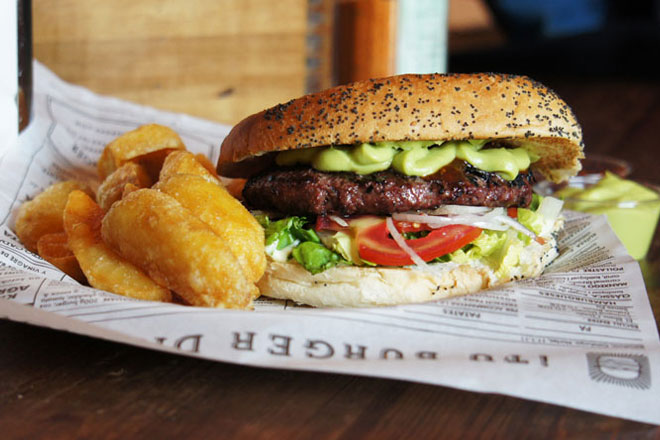
Kiosko gets 5 out of 5 "Benny burgers". It's hands down the best Barcelona burger place! I can't recommend it highly enough. If you are into burgers, and having trouble finding a not only decent, but an outstanding one, look no further. Is this the best burger in Barcelona? It's too early to say, but all other places we'll visit have their work cut out for them! Now, onto the next one!
Benny's Burgers: Best burger in Barcelona - PIM PAM
Is Pim Pam Barcelona Hamburger the Best, or the most hyped? Pim Pam Burgers Barcelona has been the place most recommended to me by friends and SuiteLife fans. So it had a lot of hype to live up to. I must say, as far as hamburgers in Barcelona go, Pim Pam is in the upper echelon.The Burgers:
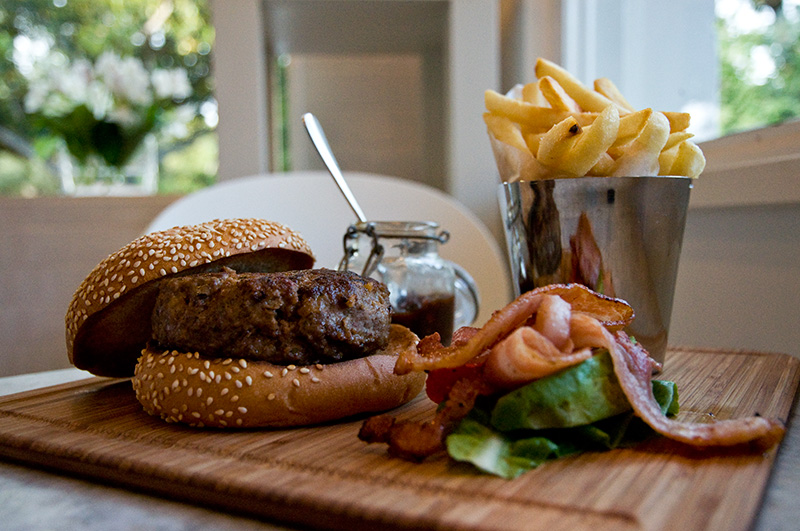
The Pim Pam burgers are excellent. These are not 'gourmet' burgers like other places offer. They are homemade-style burgers, like your grandfather might make you: big juicy delicious patties, fresh ingredients, and a nice soft bun. Aesthetically, they're not much to look at (as you can see from the photo I took on my phone), but what they lack in surface beauty, they more than make up for in taste. They have about 8 burgers to choose from (in either a small 150g version or the larger 200g monstrosity). I tried the large Barbeque burger and it was mouthwatering and tender. The fries were excellent (not as great as some of the artisanal fries the gourmet places serve, but there were definitely no complaints going around our picnic table).
The Atmosphere:
The vibe you get when walking into Pim Pam is, in my humble opinion, nothing special. There's really not enough space, and as it's so popular, it's usually packed with people huddled around the small tables and eating counters. Not super pleasant. Given it's excellent location in the Borne though, we opted to take our food to go, and we walked a couple of minutes to Parc Cuitadela, found a picnic bench, and were ready to dig in. So the atmosphere is nothing to write home about, but this place is all about the food anyways.The Verdict:
Pim Pam Burger is certainly one of the best hamburgers in Barcelona, but... it's not the best. As excellent as it is, for us here at SuiteLife, it didn't live up to its hype. I'm giving it 4.5 out of 5 Benny Burgers, and will highly recommend that all our friends and fans head down to the Borne to check it out. So the hunt for Barcelona's best hamburger continues...Benny's Burgers: Best burger in Barcelona - HEART BURGER
Heart Burger is one of the newest kids on the block in the Barcelona hamburger scene. The idea is that they are healthy for you, hence the 'heart' branding. The burgers and buns are also made in the shape of a heart. To be honest I hesitated on visiting as I found the concept quite gimmicky and cheesy. I admit, though, that it did surpass my expectations.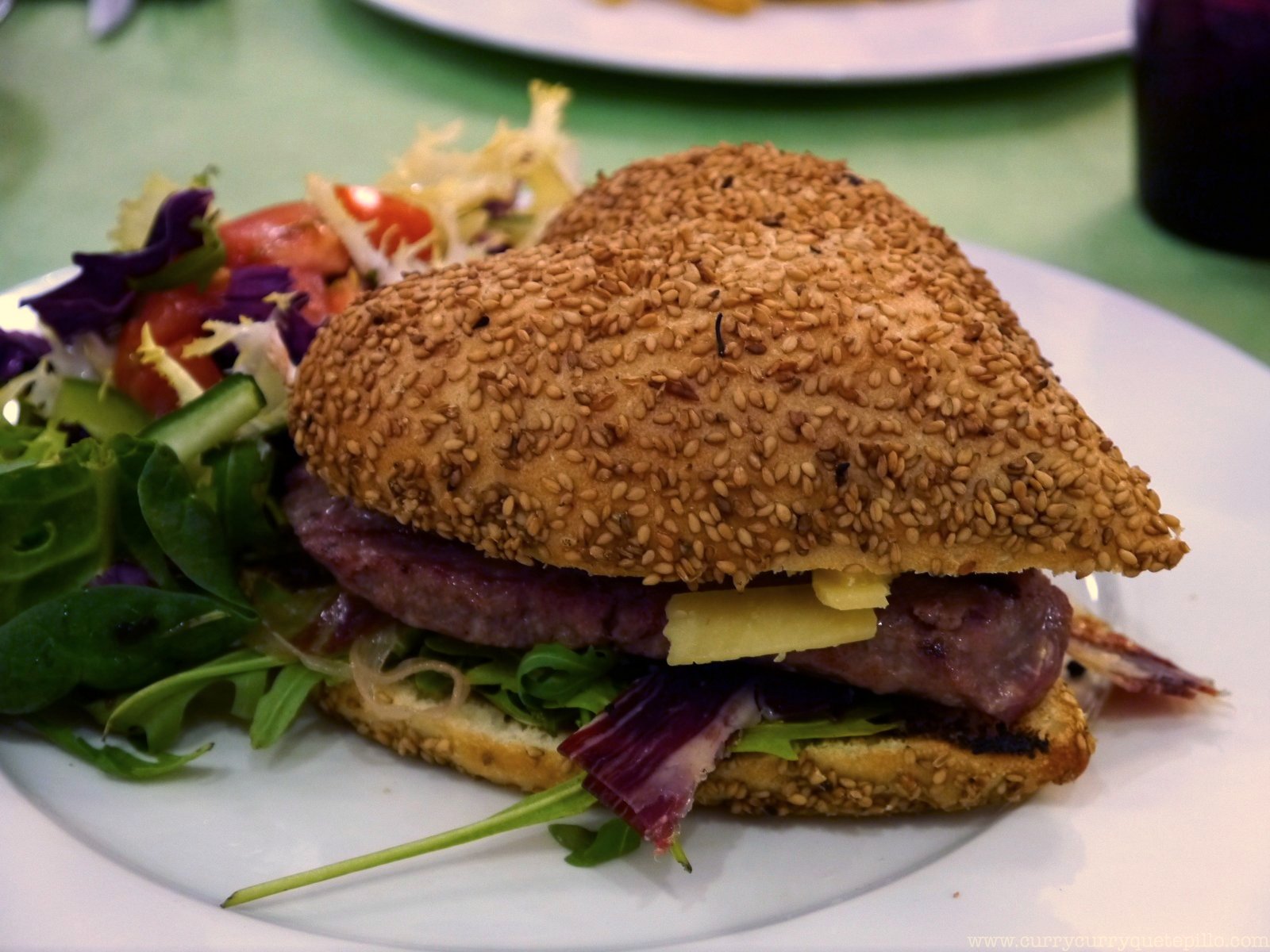
The Burgers:
The burgers are HEALTHY. They're 100% organic and free of pesticides, antibiotics, synthetic fertilizers, additives, preservatives, and all the crap we usually don't even realize we're eating. I had the New York Burger (10.75 €), which was 150 gr of organic veal, emmental cheese, fried egg, crispy bacon, and tomato. All the burgers come with fries. It was very tasty. The burgers here are a little more expensive. On average they are about 11-12 €, however, as my vegetarian friend and colleague Ranald says, it's more than reasonable to pay the premium for such quality and ecological product. They also have an extensive menu of starters, salads, desserts, etc... The only negative is that we tried the nachos and they were deplorable. I make better nachos myself at home. I mean, really, using cream cheese instead of sour cream? That must be against the law... So stay away from the nachos but the burgers are super solid.The Atmosphere:
The atmosphere is very pleasant. The restaurant is spacious, newly renovated and seating is at tables. The location is also very convenient. It's located at 602 Gran Via, just a block or two up from Plaza Catalunya and crossing with Balmes. The best part of the atmosphere was the very friendly, knowledgeable, and prompt service, which as we all know is somewhat of a rarity in this city. Barcelona Heart Burger receives a very respectable score of 4 out of 5 Benny Burgers. Have you checked it out yet? What do you think? Next one?Benny's Burgers: Best burger in Barcelona - PEGGY SUE'S
Now, we look at Peggy Sue's, which conveniently opened it's doors exactly a block and a half from my apartment! They've been open about a month and I've been 6 times so, yep, this is a good one! What's important to note about Peggy Sue's is that it's not trying to compete with the new wave gourmet burger joints in Barcelona. It's actually the newest location in a large family of chains. If you're looking for a down-home hamburger cooked with love and a great 50's throwback Americana atmosphere, you have to come checkout the place I now refer to as just "Peggy's".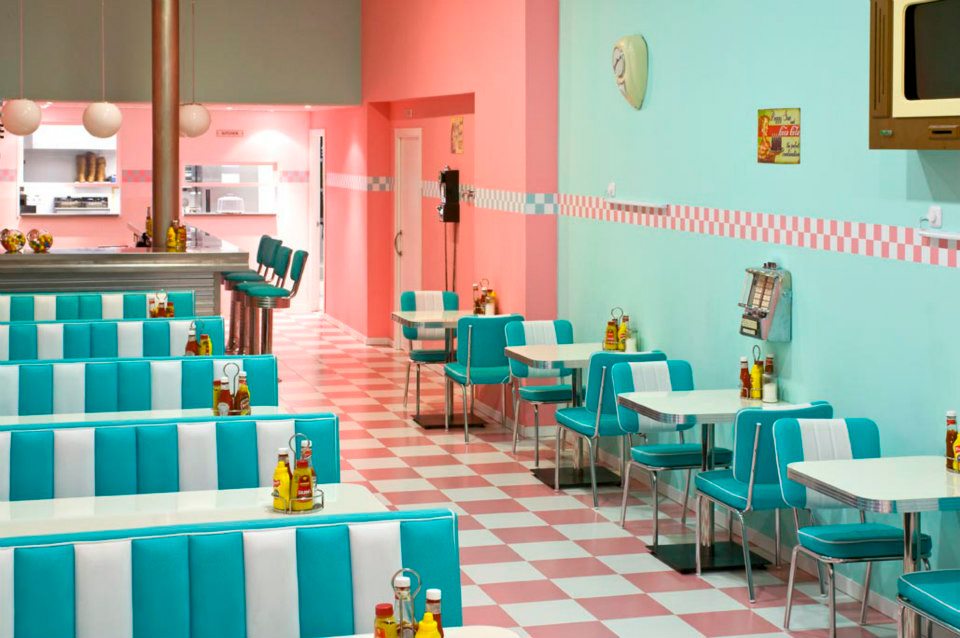
The Atmosphere:
Walk into Peggy Sue's too quickly and you might think you've been suddenly teleported back to 1958 NYC. From the bright teal-colored walls, to the throwback decor, jukeboxes, and milkshake machines, just sitting in the restaurant is a treat. The staff are extremely friendly and table service is quite fast. I've been mostly doing takeout, which is very fast and you can even call in your order and come by 20 minutes later to pick it up and save the wait).The Burgers:
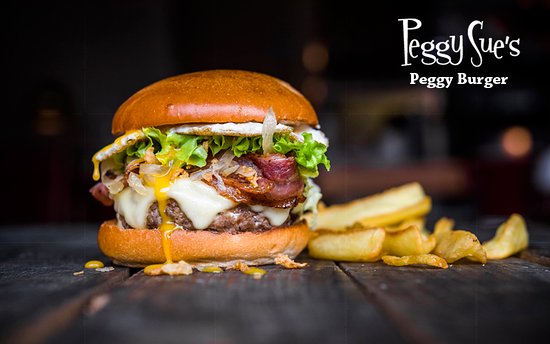
So, the food… is… awesome… Again, this is not a gourmet burger, it's a comfort food burger, pure homemade goodness just like your mom used to make you when you were a kid (no additives, no preservatives, and their special Guiness buns are very light and tasty). There are 4 burgers to choose from: The Peggy Sue, the Mary Lou, the Aretha Franklin, and the monstrous James Brown. The burgers are very reasonably priced ranging from 6.35 € - 6.75 €. I haven't tried the whole menu yet, but I can also highly recommend the onion rings, and the chicken fingers are the best I've tasted in the city, and don't forget the house pink lemonade!
The Verdict:
4 very solid Benny Burgers (out of 5) for Peggy Sue's whose done a bang up job at creating a while backing it up with lip-smacking authentic American comfort food. Have you been yet? We'd love to hear your thoughts!Benny's Burgers: Best burger in Barcelona - BACOA
Today's Barcelona burger review is on Bacoa, which is the older brother (although smaller in size) of Kiosko (the only Barcelona hamburger joint yet to get 5 out of 5 Benny Burgers). Does it live up to Kiosko? Let's see!The Atmosphere:
The atmosphere at Bacoa is very pleasant. The staff are overly friendly. One down side though is that the place is too small. It fills up fast and if you're not a bit aggressive, you can easily be left with no place to sit! I went around 2pm on a weekday and it was quite crowded. A small negative, but something to take into consideration.The Burgers:
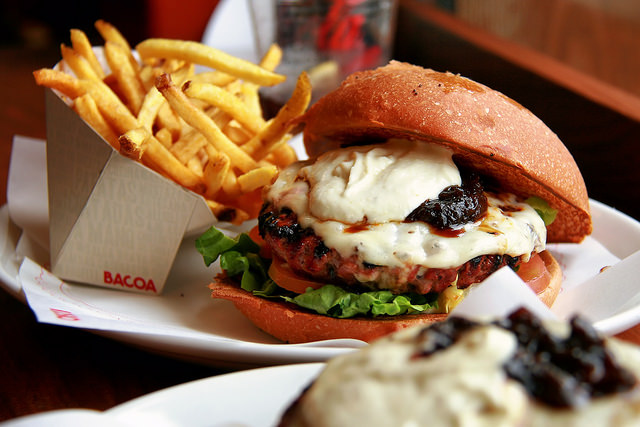
The burgers at Bacoa Barcelona are simply succulent. The only burger that you won't also find on the Kiosko menu is their special Bacoa burger, which I of course had to try. The Bacoa burger comes with a whopping 300g of beef, bacon, manchego cheese, caramelized onions, tomato, lettuce and special house sauce, and all for the rather reasonable price of 6.50 €. The home made fries (same ones at Kiosko) are the best in the city. While the burger selection is decent here, the Kiosko menu is about double the size.
The Verdict:
Bacoa is certainly one of the very best burgers in Barcelona, but it loses points because of it's diminutive size and the fact that it's new brother restaurant (Kiosko) just beats it to a pulp. Hence, Bacoa gets a solid 4 & 1/4 Benny Burgers out of a possible 5. Highly, highly recommended but make sure you try and go on off-lunch hours to avoid the wait. Enjoy! Always looking for new recommendations to add to my list. Any burger joints I can't live without visiting? Let me know! Cheers and have a great weekend SuiteLifers! Benny